Department of History
Directory
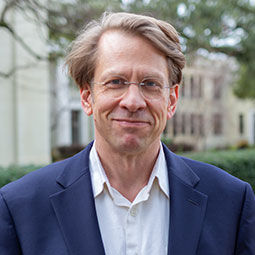
Colin Wilder
| Title: | Associate Professor |
| Department: | History McCausland College of Arts and Sciences |
| Email: | Wildercf@mailbox.sc.edu |
| Phone: | 803-777-5195 |
| Office: | Gambrell Hall, Room 239 |
| Resources: | Curriculum Vitae [pdf] |
Education
- B.A. in Philosophy, Yale University
- M.A. in History, University of Chicago
- Ph.D. in History, University of Chicago
Biography
I received my B.A. in Philosophy from Yale University and my Ph.D. from the University of Chicago. I taught my first history course at the University of South Carolina in 2015 and joined the Department of History as an assistant professor in 2016. I was promoted to associate professor with tenure in 2024.
At USC, before coming to the department, I worked in research administration with University Libraries as associate director of the Center for Digital Humanities. I have also held research fellowships at Brown University and the University of Wisconsin-Madison.
The History of Property Law and Ideas of Freedom
My first major phase of scholarly work focused on the development of classical liberalism in historical institutions, specifically in courts and policy-making bodies in Central Europe. This culminated in my book, Property and the German Idea of Freedom: From the End of the Thirty Years’ War to the Eve of the French Revolution in Germany (Brill, 2024).
Reviews of the book have been published in the Journal of Modern History, Central European History and Seventeenth Century.
The book seeks to shed new light on the growth of ideas of civil liberty, equality and rule of law in the long period between two of the most cataclysmic wars in German history: the Thirty Years’ War and the Napoleonic Wars. My argument is that a variety of actors, including rulers, policymakers, jurists, local officials, publicists and common litigants, transformed older ideas about German freedom. I show that both top-down and bottom-up processes produced civil liberty for a growing portion of the German population.
In this period, freedom expanded in three major areas: land use; taxes and dues; and use of paper money. Civil liberty, ideas about equality and restrictions on arbitrary state power were meaningful and recognized as such. These freedoms were enjoyed, at least in some measure, by all classes of Germans. They were thought to have been built atop Germans’ ancient heritage of freedom and a federalist imperial constitution that inspired Montesquieu and the American Founders. Driving these trends were ideas about political economy, enlightened reform, practical problem solving and forces of supply and demand in everything from the market for books to the market for justice.
My work expands the frontiers of classical liberal historical scholarship, bringing together examination of ideas about freedom and the growth of capitalism in parts of Europe where it has been little considered by most historians to date. In stark contrast to the Sonderweg, or “Special Path,” view, for almost two decades my focus has been on early liberal elements in German society. My mission has been to reconstruct the forgotten story of the growth of the rule of law in Germany, constitutional monarchy, civil liberties — much of the same sort as concerned English and French liberals in the eighteenth century — liberal economic policy, and social dynamism or pluralism.
I conceive of my project as a reinterpretation of the classical liberal historical metanarrative, that is, the dominant way that people tell the story of the growth of classical liberalism. According to the metanarrative, there was a revolutionary outburst of demands for freedom against traditional monarchy in Britain, North America, France and the Netherlands. These demands, it is said, were inspired by traditions of rule of law and by new enlightened ideas of freedom, equality and reform.
I contend that classical liberal law and politics arose in German lands through similar mechanisms, but also through patronage, institutional conflict and pressure from commercialization, or early capitalism. Thus, my story about freedom in early modern Germany stands close by the side of more familiar stories from elsewhere.
Capitalism in the Free German Empire, 1495–1793
My major post-tenure historical research project is about the development of capitalism and public finance in the German states over roughly the same period as that discussed above. Public finance is how states raise revenues through borrowing. This area of research grows out of the property rights focus of my early work, in particular theories of economic development and property rights.
Like in my earlier work, my hypothesis continues to be that, in contrast to what is still the most prevalent modern opinion, Germany was not a failed state before 1871, nor late in developing liberal institutions. Rather, it was a loose federal state developing peculiar liberal institutions of its own and was recognized as such by many contemporaries. For centuries before the Revolutionary Era, Germany saw freely evolving markets, production and capital flows. Capitalist-generated wealth gave German societies the strength to resist the predations of Great Powers around them.
Much of both the scholarship and the teaching about the history of capitalism, from Karl Marx to Sven Beckert, focuses on domination, exploitation and suffering. Without wishing to downplay the history of real human suffering, the story I am exploring underlines innovation, discovery, social evolution, free pricing, and the mobility of people and capital — in other words, liberal themes rather than Marxist themes.
For this, I adopt the evolutionary models from liberal thinkers — from classic thinkers like Adam Smith to more recent scholars like Friedrich Hayek and Douglass North. I use such liberal models to interpret the growth of early modern German financial markets. Their work would suggest that certain legal freedoms may have been crucial for the development of capitalism in Germany, as elsewhere. In particular, this would include enterprise freedom, flexible property rights, lack of supervision, internalization of profits within firms, multi-party unplanned institutional evolution and monetary evolution.
Put simply, liberals have argued that freedom created capitalism just as capitalism also nourished freedom. Was this true in the German lands? Similarly, was German mercantilism inimical to economic liberalism, or was it better understood as a variation of it appropriate to the struggles of small, landlocked states? This new work will explore the growth of personal freedom and free institutions in a historical domain in which people are unaccustomed to search for it, namely the context of European “enlightened absolutism” and Baroque monarchy.
I am also interested in exploring how capitalism and state sovereignty interacted in the same period. That is, evidence from the history of other states suggests, basically, that capitalism helps states become richer, and they can use this wealth to assert their political independence more forcefully. In this case, the question is: Did German policies favoring production, trade and development in the long run generate the wealth, and therefore the public revenue, to enable German states to remain politically independent despite constant threats around them from the Great Powers of the day — France, Austria, Prussia and Russia? Did political freedom build on economic freedom?
As I see the elements of the story, loosely connected metropolitan money markets developed in major German trading cities like Frankfurt am Main and Hamburg. Capital markets developed out of the annual trade fairs, like those in Frankfurt. In Hamburg and Nuremberg, exchange banks modeled on the Wisselbank of Amsterdam stabilized currency value and fostered growth of paper money markets. A jurisprudence of impersonal securities markets was developed by competing German courts — of the types that featured prominently in my prior work.
This story is important for two reasons. First, the mobilization of capital through paper securities, traded on impersonal markets, was fundamental to the free investing and pricing dynamics of emergent capitalism. Second, the vitality of these regional money markets was what permitted governments around the Holy Roman Empire to transact, borrow, survive and grow. In turn, it was the survival of so many of these federal states that enabled the Holy Roman Empire itself to survive and remain free even in the face of the massive new “power states” like France and Prussia.
Teaching and Professional Service
My teaching at USC corresponds to my scholarship, of course, albeit adapted to departmental and student needs. Most recently, I have taught courses on German history (HIST 338), modern European history (HIST 102), the history of constitutionalism and republicanism (HIST 469), and the history of capitalism and business (HIST 370, HIST 377 and HIST 778).
My major teaching specialization is the history of money, capitalism, business, public finance and ideas of political economy. If you take my classes, therefore, you are likely to read some of the following authors — note the array of Left and Right thinkers — in alphabetical order: Saifedean Ammous, Giovanni Arrighi, Walter Bagehot, C. A. Bayly, Richard Bonney, Ray Dalio, Christine Desan, Colin Drumm, Niall Ferguson, Alexander Hamilton, Friedrich Hayek, Friedrich List, Karl Marx, Douglass North, Murray Rothbard, Jacob Soll, Adam Smith, Immanuel Wallerstein and/or Max Weber.
This teaching interest goes all the way back to my pre-USC teaching experiences at the University of Chicago and Brown University, where I taught courses such as “Law, Liberty, and Property in European History,” “Prosperity and Poverty: The History, Politics, and Ethics of National Wealth,” and “The Emergence of Capitalism.”
Civic Thought and Leadership
Over the past several years, I have been engaged in the development of new curricula explicitly focused on deepening civic understanding through engagement with the humanities. This began with developing a new interdisciplinary minor at USC, entitled Civics & Humanities.
The minor consists of courses related to the American Founding documents as well as courses on earlier great themes and texts from humanities traditions that influenced the American Founding. I describe this to people as, in a nutshell, like Thomas Jefferson’s personal library — half Great Books of the past, half constitutional prudence of the American Founding.
We are planning to introduce an introductory seminar to the minor, to be entitled “Fundamental Texts and Ideas (How to Read a Great Book).” The idea is for students to learn how to slowly and carefully read a single fundamental humanistic text relevant for understanding foundational American ideas, such as Plato’s Republic, Plutarch’s Lives or Milton’s Paradise Lost.
Center for American Civic Leadership and Public Discourse
Since 2025, I have served as academic director of USC’s Center for American Civic Leadership and Public Discourse. I coordinate the development of the center’s graduate and undergraduate programs.
These programs include our Foundations of Civic Education and Public Discourse courses as well as the Civics & Humanities minor. In this work, I collaborate with my department colleague, Dr. Donovan Fifield, who also serves as undergraduate coordinator of the center. Our next major project is to develop a minor in Philosophy, Politics and Economics (PP&E) at USC.
Civics and Humanities Initiatives
“Civics and Humanities” is also the broader name that I have adopted to describe my own set of initiatives to make the aforementioned curriculum widely available — both for current students and recent graduates, whether from inside the university, living elsewhere in South Carolina, or from far-away places like Massachusetts or Texas.
The centerpiece up to this point has been a set of free seminars I have organized since 2024. Seminars so far have focused on “Great Books and Great Ideas,” including the thought of Alexander Hamilton, Thomas Jefferson, Hannah Arendt, John Stuart Mill, Friedrich Hayek, Edmund Burke and Friedrich List, as well as broader ideas and traditions like the medieval Trivium and Antebellum Southern Political Thought.
Support for these seminars has come from many quarters, including federal grants, the Center for American Civic Leadership here at USC, and nonprofit organizations like the Institute for Humane Studies and the Apgar Foundation.
Learn more about these initiatives on the Civics and Humanities website.