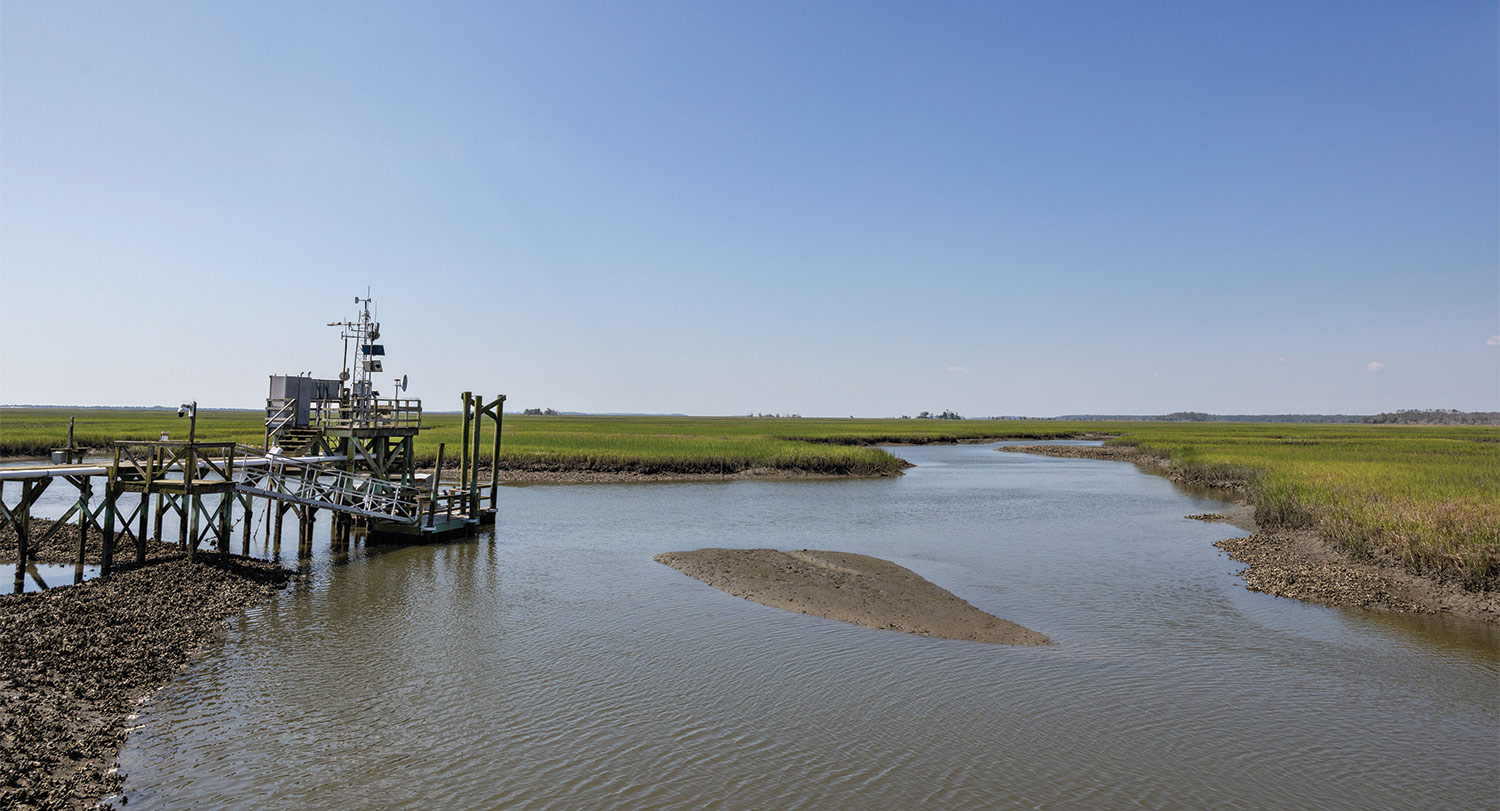
The views are spectacular. Toward the coast, inlets and marshes are hedged by cordgrass and cattails. Sweeping bridges give way to sandy shoreline and one of the state’s most beautiful natural resources — its water.
Just east of Georgetown across Winyah Bay is the Belle W. Baruch Institute for Marine and Coastal Sciences, where researchers from the University of South Carolina and partner institutions work to sustain the state’s precious coastal resources.
Bill Strosnider is one of them. An associate professor in the McCausland College of Arts and Sciences and an engineer by training, Strosnider leads the Baruch Ecological Engineering Lab and is the assistant director of academics for the institute.
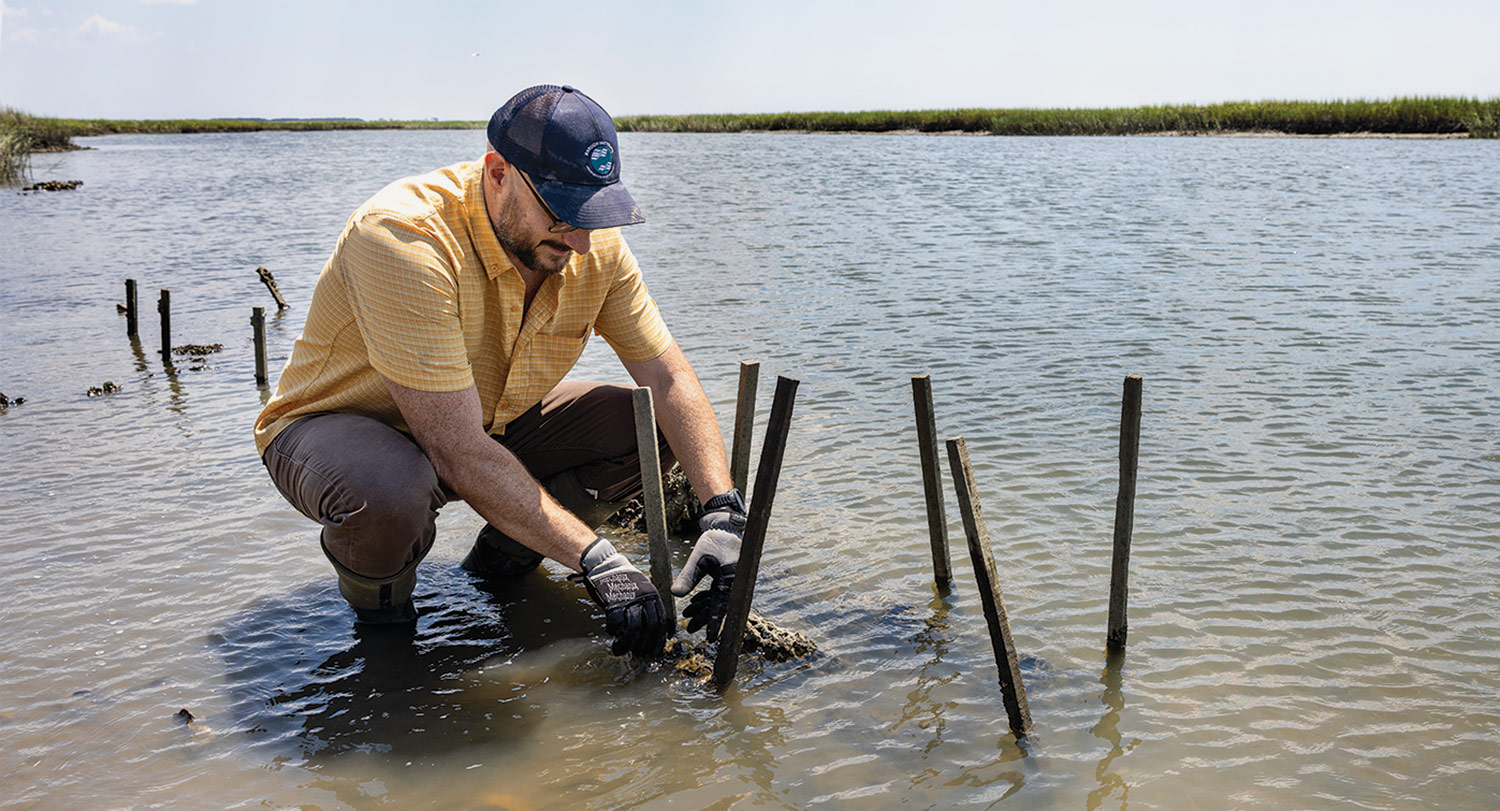
Ecological engineer Bill Strosnider tests biodegradable materials for oyster reef restoration projects.
“The landscape is such an asset for the state. It’s important for future generations to have access to the same incredible environmental resources that we have now,” he says. “The problem is that as we develop more and more, we’re impacting these vibrant natural habitats and really valuable ecosystems.”
Strosnider has been stationed at the Baruch Marine Field Lab since 2019, although he first worked with the institute as a master’s student at the College of Charleston. He earned his Ph.D. from the University of Oklahoma, where he focused on the emerging field of ecological engineering.
“When done right, ecological engineers sit between the engineers and the scientists and help them work together,” says Strosnider, who is the sole engineer in USC’s School of the Earth, Ocean and the Environment.
Strosnider aims to find more sustainable, yet practical, solutions to environmental issues. At the heart of his work is the paradox that some accepted environmental practices fall short, providing poor habitat and actually harming the environment to a certain extent.
A prime example: stormwater ponds. Developers build them near residential areas to help prevent flooding and to keep sediment from washing downstream. While the ponds do some good for the environment, Strosnider says they could be doing so much more.
“There are tens of thousands of these ponds per county in our region,” he says. “Nobody was thinking about habitat when they designed them, and residential neighborhood landscapes are generally ecological deserts. You’ve got nowhere for animals to be.”
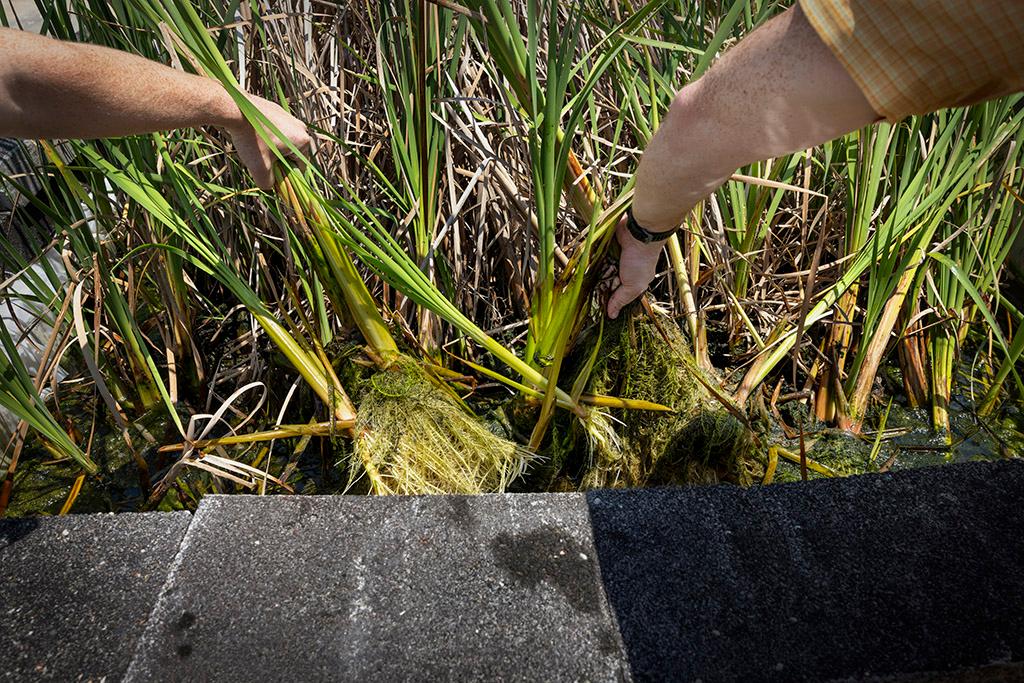
Strosnider’s team is researching how to use natural materials and the power of plants to change that. They developed a floating island design — self-supporting wetlands for man-made ponds — to welcome back animal and plant life while improving water quality.
“Cattail can actually float on their own, so that’s one of the native plant options we’ve proven in our designs, which gets us away from the plastics that dominate current conventional models,” he says.
For the past three years, Strosnider has led multiple institutions in an initiative supported by a grant from the National Oceanic and Atmospheric Administration. The project has several components, with each partner contributing to the research.
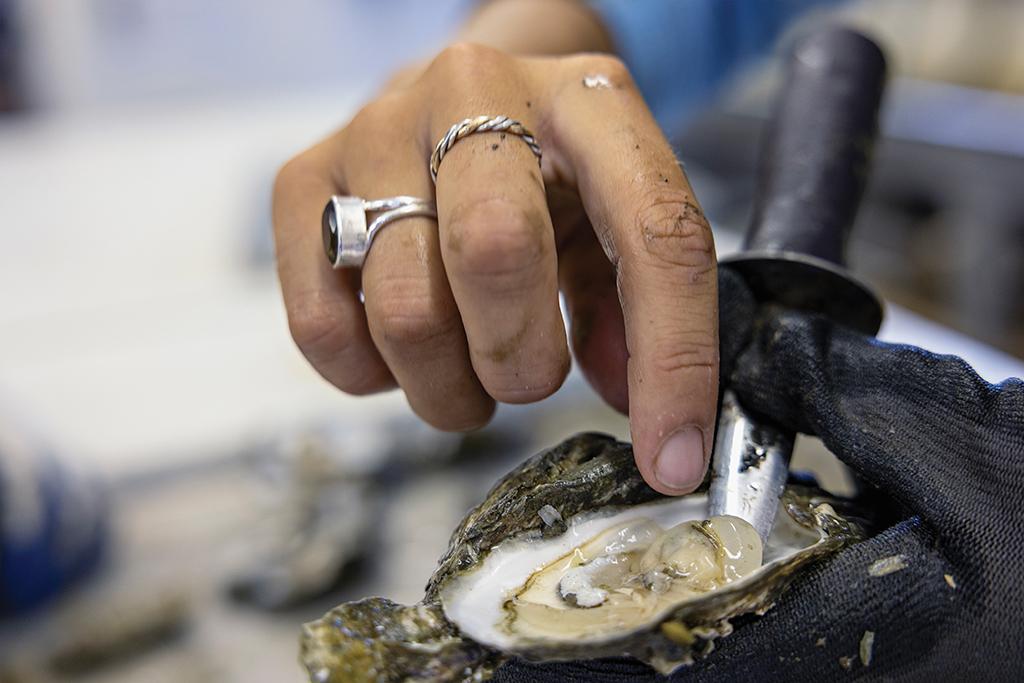
The overarching goal is to find natural materials to replace the plastics normally used in environmental applications. In restoring oyster reefs, for example, it’s common to stack plastic mesh bags full of oyster shells for new oysters to grow on.
“Although our focus is the coastal zone, the work that we’re doing is applicable everywhere — throughout the rest of the world.”
“So, then you’ve got an oyster that’s filtering water sitting right next to all this plastic that over time is degrading and polluting the water we’re trying to clean,” he says. “We shouldn’t create one environmental problem while trying to solve another.”
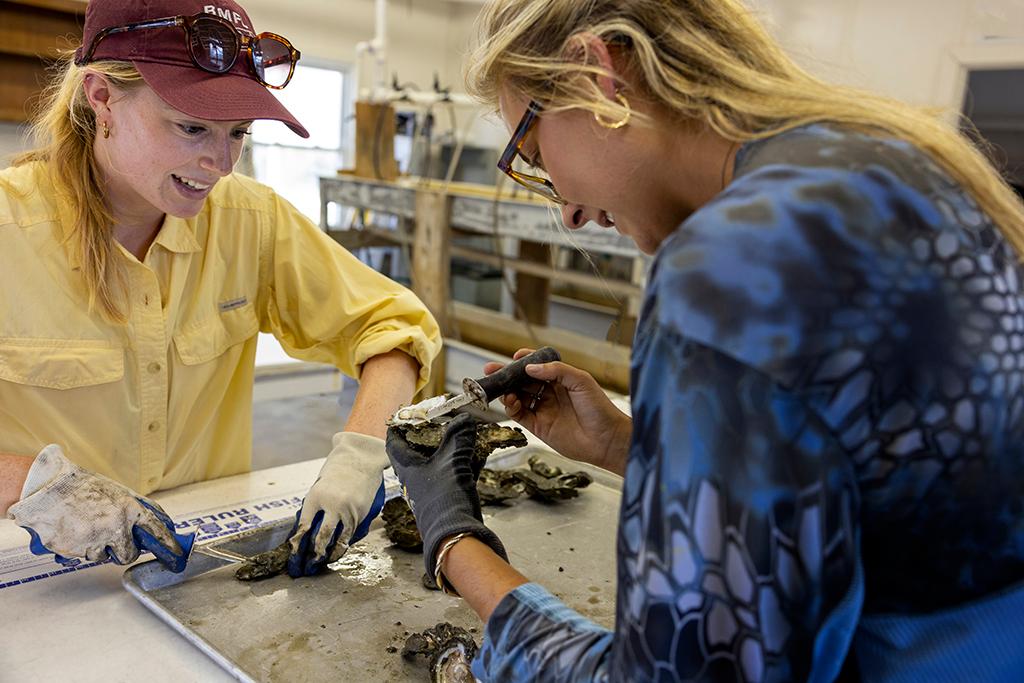
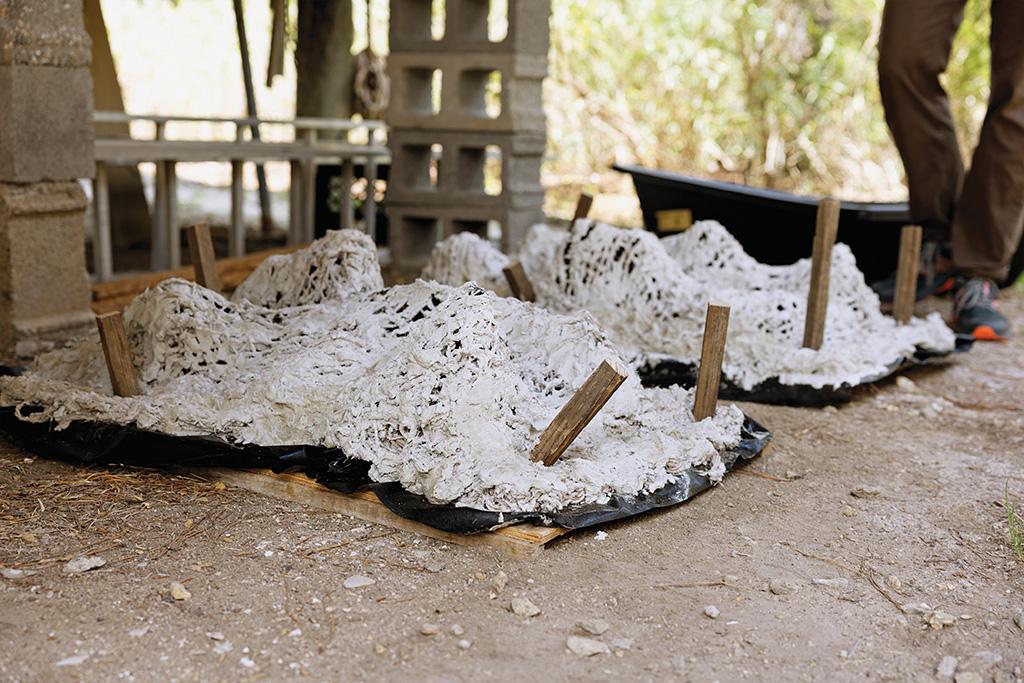
The important thing is to use materials that will biodegrade over time while allowing the ecosystem to heal. Strosnider also wants to show how well these materials perform compared to their plastic counterparts. They’re testing options that are already available on the market: things like hemp, bamboo, wood and cotton. For the oyster restoration work, his team has tested designs made of jute mixed with concrete.
Strosnider’s team isn’t the first to use this material, which was pioneered by researchers in Florida, but they’re taking the technology a step further. By molding the material to a form shaped like local oyster reefs, the team creates a structure with all the nooks and crannies where baby oysters like to grow.
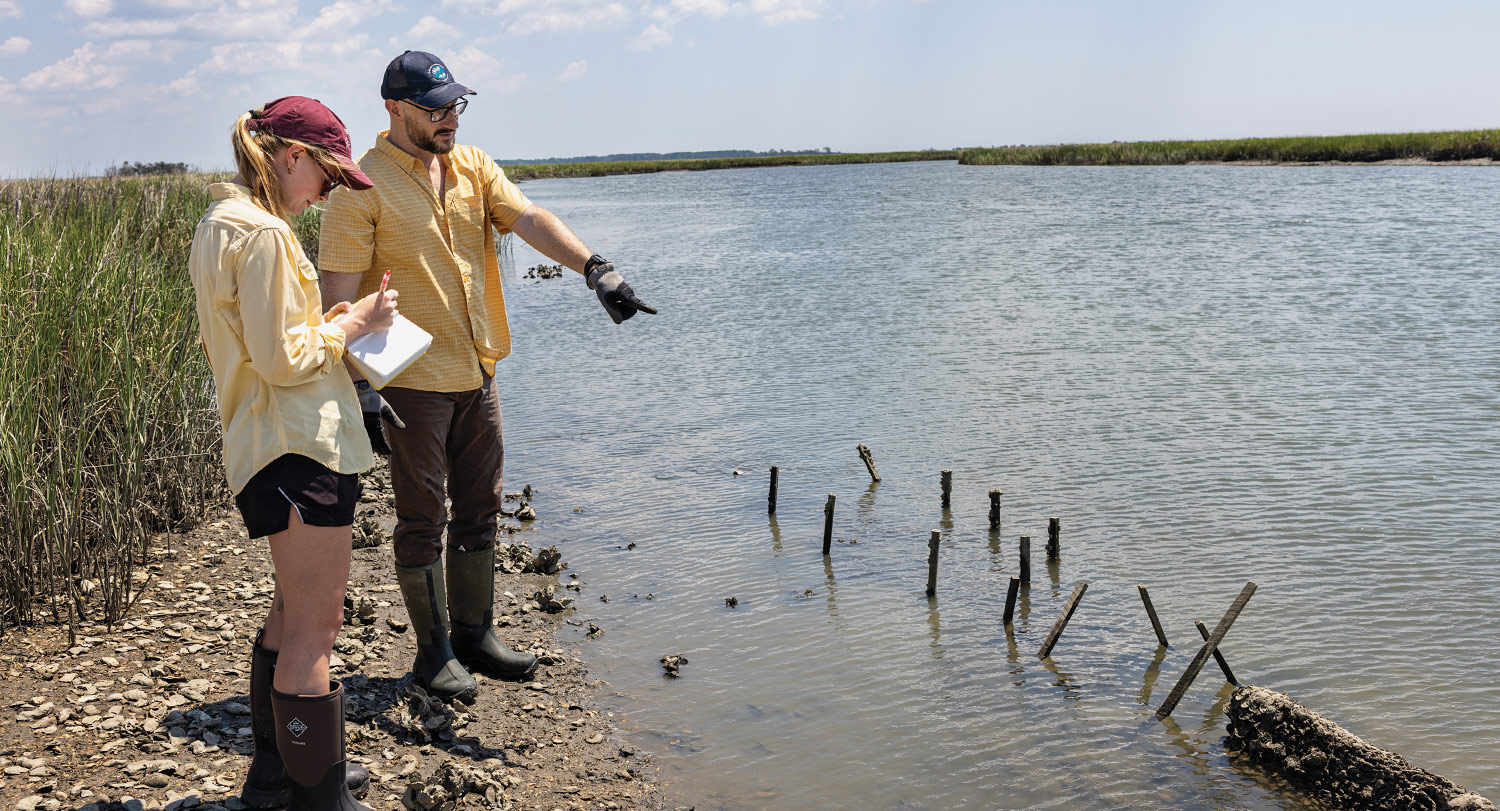
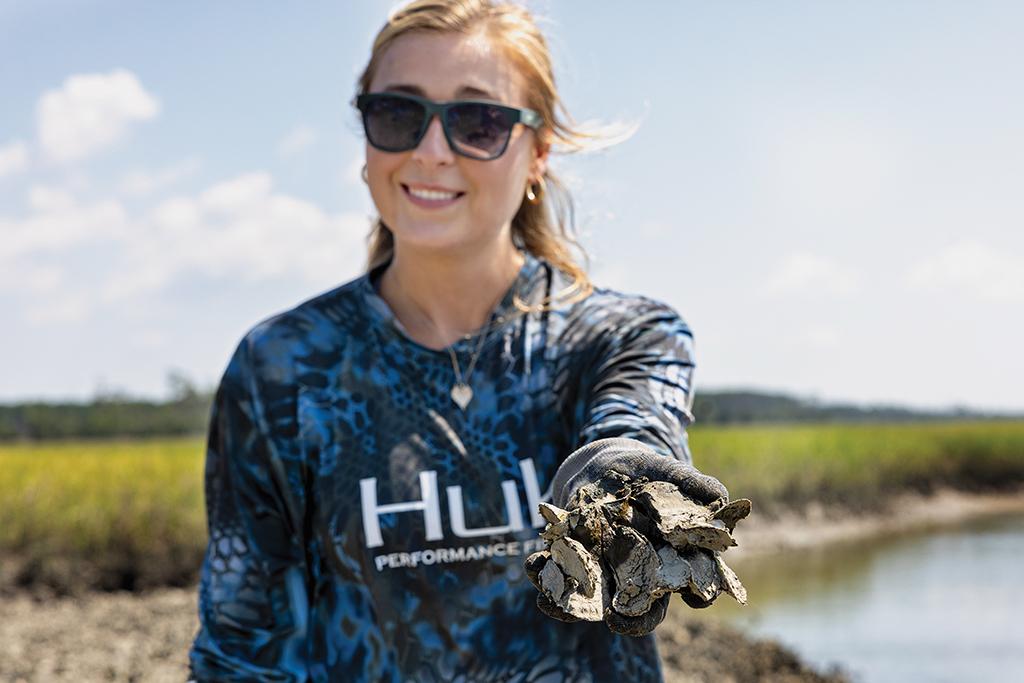
Bill Strosnider and South Carolina Honors College alumna Lousia Mai inspect an oyster reef at a test site.
“When we’re putting something in nature, we want it to blend in and look natural,” he says. “With our ‘ReefMimics,’ I could see how after two years of growth, you wouldn’t even be able to tell this was a restored reef.”
As they head into the grant’s final year, Strosnider’s team is focusing on communicating their findings. By showing that these natural materials perform well, the hope is that decision-makers and engineers will get on board with switching to these non-plastic alternatives.
“Although our focus is the coastal zone, the work that we’re doing is applicable everywhere — throughout the rest of the world. If we can show that a material works in our tough coastal environment, it’ll be a shoo-in across many other settings,” he says.