As a psychology major at NC State University, Indira Gutierrez Orozco was conducting research on social determinants of health before she knew that’s what
it was called. It was a natural extension of her interests, which were shaped by her
upbringing as an immigrant child of a single mother and deepened through her early
work as a mentor in community K–12 afterschool programs in Charlotte, North Carolina.
“As an undergrad, I did a lot of advocacy work around collegiate hunger and homelessness
– partly because I had lived it myself,” says Orozco, who had also worked in afterschool
programs during high school. “Seeing myself in underserved youth deepened that passion,
and a research advisor eventually encouraged me to apply to Ph.D. programs. That's
when everything clicked.”
I got to do independent work on diabetes management, joined a nutrition policy project,
traveled to Mexico for research collaboration, and presented my first-author paper
in New Zealand – my first time outside the Americas.
Indira Gutierrez Orozco
Having attended an engineering academy in high school and being recognized for her
potential in the field, public health had never been part of the plan. Instead, Orozco
says, it became a calling.
A generous financial package from the Arnold School put USC at the top of her list,
but it was the interview with a faculty member from the Ph.D. in Health Promotion, Education, and Behavior (HPEB) program that sealed it for Orozco.
“I made a joke about wanting to help cure Alzheimer's one day, and he said, genuinely,
‘you actually could,’" she recalls. “That opened my eyes to how interdisciplinary
this work is. I knew I'd never run out of things to explore.”
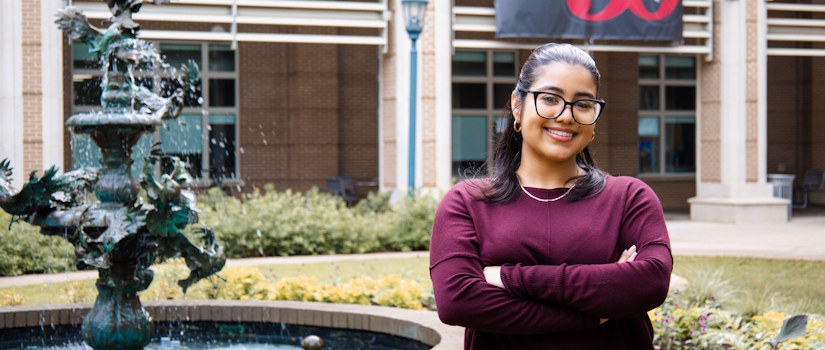
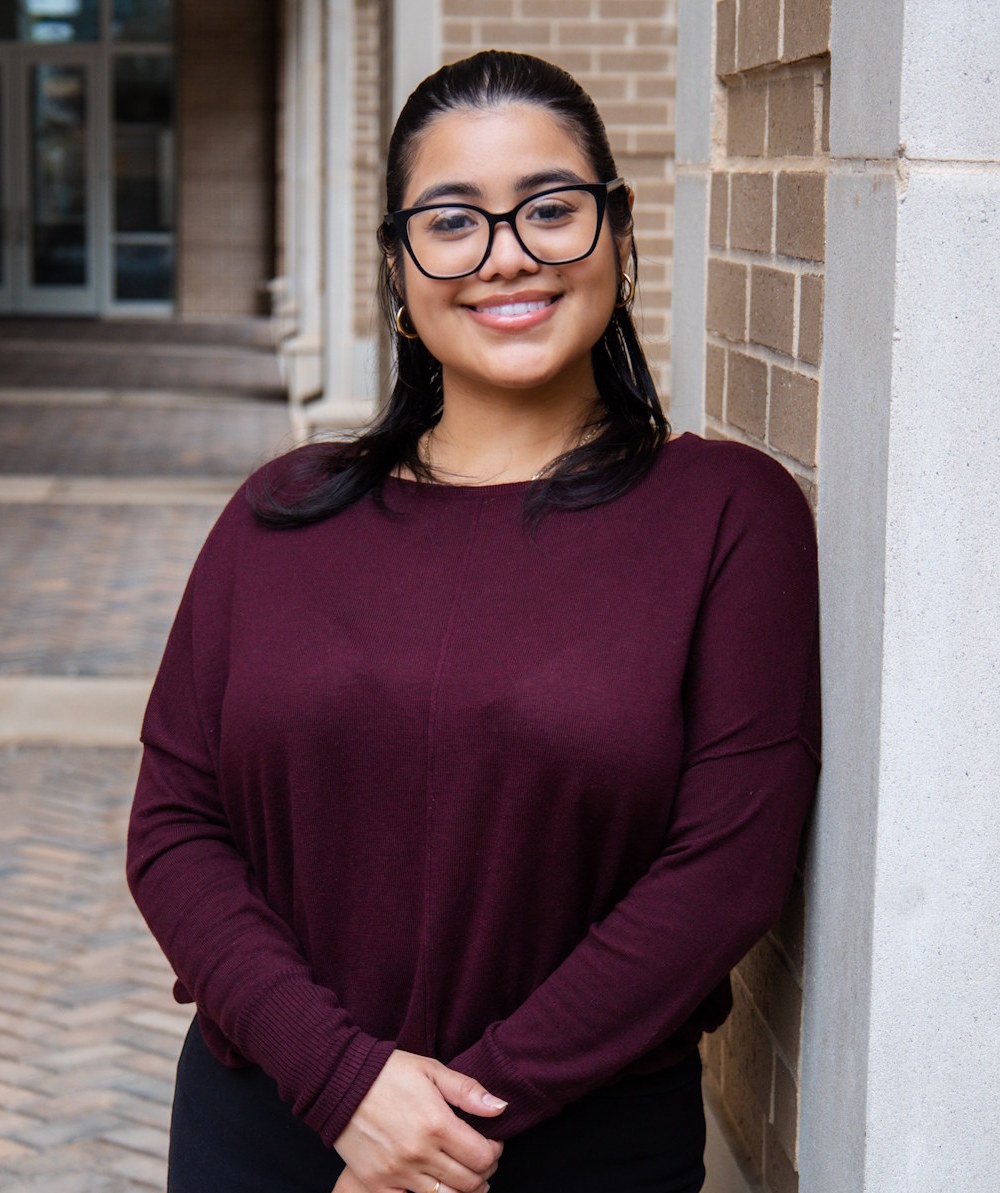
Indira Gutierrez Orozco graduates in December with a Ph.D. in Health Promotion, Education,
and Behavior.
During her time in the program, the Norman J. Arnold Doctoral Fellow gained experience
through a variety of projects. She worked with HPEB faculty Jim Thrasher and Rachel Davis on NIH-funded projects related to smoking cessation and nutrition labeling in different
countries and supported Spencer Moore and Julie Smithwick on community pharmacy and community health worker capacity-building initiatives.
Orozco also leant her leadership skills to the USC Student Success Center as a consultant
and to the Center for Community Health Alignment and PASOs as chair of the Diversity,
Inclusion, Justice, and Equity Committee.
She experienced more than her fair share of challenges as well. In 2020, Orozco lost
her car to the flash floods that impacted much of Columbia and was hospitalized for
a month with COVID-19 before vaccines were available. Long COVID and the departure
of her then-advisor meant the struggles continued until a new mentor stepped in.
“I was eventually adopted by Dr. Davis, who has been steady and kind through everything,
and things stabilized in the best way,” Orozco says. “I got to do independent work
on diabetes management, joined a nutrition policy project, traveled to Mexico for
research collaboration, and presented my first-author paper in New Zealand – my first
time outside the Americas.”
With her December graduation approaching, Orozco is ready to continue leading independent
research and hold a professional position that reflects her training. Her interests
live at the crossroads of public health, psychology and biology, and she is particularly
passionate about addressing or advancing Latine health disparities, social determinants
of health, chronic disease, nutrition policy, body image, eating pathology and the
intersection between trauma-responsive practice and wellbeing.
Though she’s open to additional training and positions at various organizations, Orozco
would like to return to academia someday to lead research and mentor students. She
found her work supporting other students at the Graduate Student Success Center to
be particularly fulfilling and would like to pursue that type of work in the future.
With all she’s been through, Orozco has some perspective on the graduate school experience.
She urges future students to “Ask the question; you’re not the only one who has it.
Build community, not just a professional network, because grad school can be isolating
and competitive in ways nobody warns you about. Give yourself grace. Comparison is
the thief of joy, and your timeline is not anyone else’s because your life has not
been anyone else’s.”