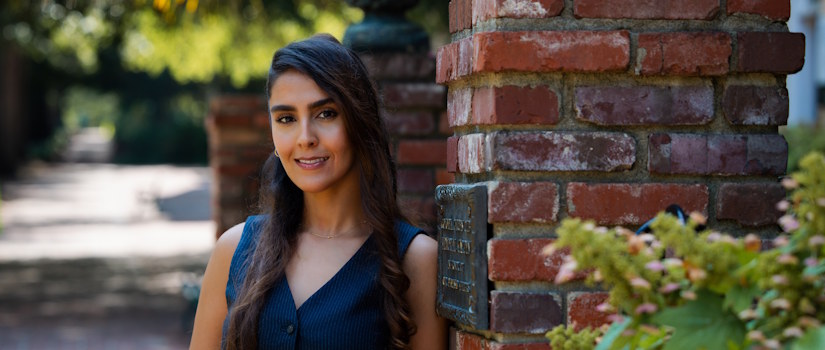
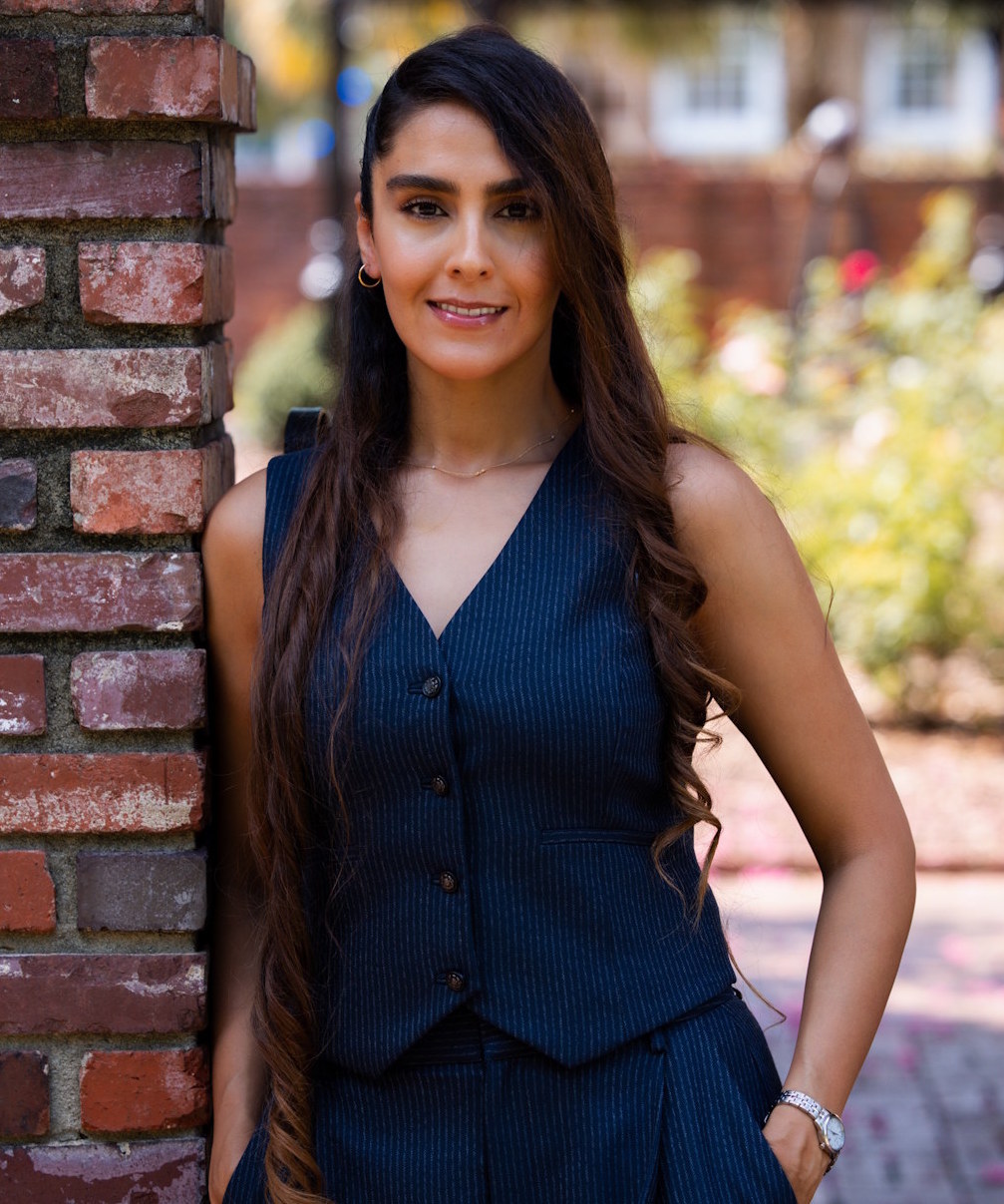
For Farnaz Hesam Shariati, environment is everything. With two degrees in architectural engineering, she came
to the Arnold School to add another layer to her expertise. Hesam Shariati is entering
the third year of her Ph.D. in Health Promotion, Education, and Behavior (HPEB) program, where she is researching how the built environment (i.e., various
features of neighborhoods and communities such as parks and sidewalks) influences
physical and mental health and wellbeing.
The Arnold School’s HPEB department caught my attention for its perfect curriculum,
content, and core courses, through which I could explore in-depth topics such as health
inequity, defining an intervention for health promotion, and how to effectively examine
its effects.
Farnaz Hesam Shariati
Her journey began in the beautiful mountains of western Iran, where Hesam Shariati
developed a deep appreciation for community and public spaces before moving to the
U.S. to pursue a doctoral degree. Though she began her studies in a different program
at another university, she began developing interests in connecting the built environment
and residents’ health behaviors and outcomes as well as their overall wellbeing.
“The Arnold School’s HPEB department caught my attention for its perfect curriculum, content, and core courses, through
which I could explore in-depth topics such as health inequity, defining an intervention
for health promotion, and how to effectively examine its effects,” Hesam Shariati
says. “In addition, the ongoing research in the Built Environment and Community Health Laboratory – or BEACH Lab as we call it – aligned perfectly with my research interests, and
I was delighted work with the lab’s director Dr. Andrew Kaczynski.”
Farnaz Hesam Shariati is a student in the Ph.D. in Health Promotion, Education, and
Behavior program.
At the BEACH Lab, as well as through her own interests, Hesam Shariati has been exploring
environmental psychology and behavioral health, the built environment and physical
health, health equity and environmental justice, and geospatial and community-based
research methods. Her program has helped her amass experience in publishing peer-reviewed
journal articles, writing and securing grant proposals, presenting at national conferences
across the country, managing large research projects, mentoring undergraduate students
through their honors theses, developing and teaching course modules, and providing
academic service through peer review for over a dozen journals.
“Dr. Kaczynski has shaped my journey in ways I am truly grateful for – such as giving
me the space to explore while always helping me think more critically and rigorously
about my work,” says Hesam Shariati, who has also found supporters in HPEB professor
Daniela Friedman and recent doctoral graduate and BEACH Lab colleague Anna Chupak. “Dr. Friedman has been a wonderful source of encouragement and genuine kindness
throughout the program, and having someone like Anna by my side has made the whole
experience so much richer, and it is a perfect example of the kind of community you
find in this program.”
Though being an international student comes along with a certain amount of homesickness,
Hesam Shariati has found a true sense of belonging in her department, the broader
campus community, and the capital city. She loves Columbia’s vibrancy and is even
committed to enhancing its built environment by leading the Columbia Sidewalks Project
through the BEACH Lab.
“We have worked with a large team of undergraduate students and a community advisory
board of leaders from across Columbia and South Carolina to identify disparities in
sidewalk access and how this relates to diverse physical and mental health outcomes,”
says Hesam Shariati, who plans to continue this type of work with a postdoctoral fellowship
after graduating in 2027. “It is one of those moments where your personal life and
your research life come together in the most meaningful way, and it reminds me every
day why I chose this field.”