School of Music
- SC.edu
- Study
- Colleges and Schools
- School of Music
- Faculty and Staff
- William Bates
Faculty and Staff
William Bates
| Title: | Distinguished Professor Emeritus |
| School of Music |
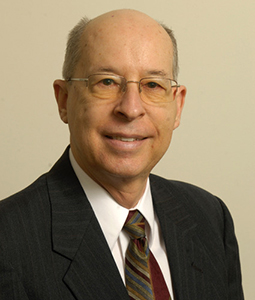
A native of Brownwood, Texas, William H. Bates earned the BM in organ and church music and the BA in music theory from Howard Payne University (1966), and both the MM and the DM in organ performance at Indiana University. During his performance career, Dr. Bates presented recitals and workshops for churches and AGO chapters throughout much of the United States and for a number of music conventions, including national meetings of the American Guild of Organists and the Organ Historical Society. He also played recitals in Europe, including those at Notre Dame Cathedral in Paris and King’s College in Cambridge, England. Critics were unanimous in their appraisal of Bates’s performances: “Expert command of the organ . . . Executes difficult compositions flawlessly” (Pensacola, Florida); “It was a highlight in several years of performance programming! Such stunning musicianship” (Huntsville, Alabama); “A flawless performance” (Indianapolis, Indiana); “Bates demonstrated to a lively and enthusiastic audience that an organ recital can be an exhilarating as well as a musically rewarding experience” (Charlottesville, Virginia); “Dr. Bates’ memorized performance received a standing ovation” (The Diapason); “”Played with a technical ability seldom heard” (Tampa, Florida); “Virtuosity, perfection, and artistry” (Washington, D. C.); “William Bates’s recital of Liszt, Franck, Brahms and Reubke saw him thoroughly in his stylistic element giving his audience beautifully cohesive and virtuosic renditions” (The American Organist, reporting on his performance at the 1987 International Organ Festival in Redlands, CA).
For three years Dr. Bates taught organ principals at Indiana University before joining the music faculty of The University of West Florida. From there he went to the University of South Carolina, where from 1978 until his retirement in 2011 he taught organ and music history and also served as associate dean and director of graduate studies for the music school. Twice he was elected by university faculty to serve on the University Graduate Council, and twice that body elected him as chair. Additionally, he served as campus faculty advisor for InterVarsity Christian Fellow¬ship. Dr. Bates was called back to teach music history during the 2011–12 academic year, boosting his teaching career to forty-six years. He also served a chair of the planning committee for the (then) new music building (located at 813 Assembly) and oversaw that facility’s construction.
Over his professional career, Dr. Bates contributed articles and reviews to The American Organist, The Diapason, The Journal of the American Liszt Society, and BACH: Journal of the Riemenschneider Bach Institute. Several of his choral works are available from Hinshaw Music (Chapel Hill, NC), and six organ collections have been printed by Concordia Publishing House. Most recently MorningStar Music Publishers has released his Sonata Breve, a three-movement work for organ that was commissioned for the 2013 Region IV Convention of the American Guild of Organists. In 2012 he was named a recipient of the Oswald Gleason Ragatz Distinguished Organist Alumnus Award by organ graduates of the internationally acclaimed Jacobs School of Music, Indiana University. The following year his undergraduate Alma Mater, Howard Payne University, recognized him as a Distinguished Alumnus. In addition to numerous volunteer activities, Dr. Bates continues to pursue research/publication venues and music composition. Presently (Fall 2018) he is completing a 2½-hour work entitled The Passion of Jesus of Nazareth and is also pursuing a long-delayed research project concerning the original sources of 18th-century organ music.
Additional information:
Married 1971–2010 to Dr. Carol Henry Bates (1944–2010)
One son, Stephen Henry Bates (Wheaton College, 2004; Michigan State University, 2007);
married Amy Cleaveland Bates (Wheaton College, 2003), two grandsons
A native of Texas, William H. Bates earned the Bmus in organ and church music and the BA in music theory at Howard Payne University, and both the Mmus and the Dmus in organ performance at Indiana University.
Dr. Bates presented organ recitals and workshops for churches and AGO chapters throughout much of the United States and for a number of music conventions, including national meetings of the American Guild of Organists and the Organ Historical Society. He also played recitals in Europe-in particular, at Notre Dame Cathedral in Paris and King's College in Cambridge, England. In addition, he contributed articles and reviews to, among other venues, The American Organist, The Diapason, The Journal of the American Liszt Society, and BACH: Journal of the Riemenschneider Bach Institute. Several of his choral works were published Hinshaw Music and a number of organ collections by Concordia Publishing House. Large works composed before his retirement include The Creation (six-part chorus, organ, woodwind quintet, percussion, and digital keyboard) and Gloria (six-part chorus, organ, three trumpets, three trombones and timpani).
Under his tutelage, a number of organ students received training that enabled them to become successful church musicians, and many also successfully completed graduate degrees at leading music schools such as Indiana University and Yale University. In 2011, after teaching at USC-Columbia for thirty-three years, Dr. Bates retired from the school, where he held the position of Professor of Organ and Music History. During his years at USC he filled posts as associate dean and director of graduate studies for the music school and twice was elected by university faculty to the position of chair of the University Graduate Council. For his first year of retirement, Dr. Bates taught undergraduate music history at USC, this adding a forty-sixth year to his university teaching career. In 2012 he was named a recipient of the Oswald Gleason Ragatz Distinguished Alumni Award by organ alumni of his alma mater, the Jacobs School of Music, Indiana University. Retirement plans were to include more research, composition, travel, and mission work. His message to those who follow: "There is no more important decision in life than one's relationship to Jesus Christ. All else revolves around this."