Adiba Bilqees Promiti’s interest in public health began with her first position out of college. She had
already completed bachelor’s and master’s degrees in statistics when she secured a
job as a biostatistician with the Child Health Research Foundation in Bangladesh.
“During that time, Dhaka Children’s Hospital was facing a challenge: beds occupied
by non-emergency patients were limiting the hospital’s ability to admit children who
needed emergency care,” Promiti says. “Seeing this made me think more deeply about
how data could help us understand problems in healthcare delivery and inform decisions
about limited resources.”
My doctoral training has prepared me to examine the assumptions behind an analysis,
develop methods when existing approaches do not adequately address the data, and collaborate
with researchers from different disciplines. I hope to use these skills to contribute
evidence that informs better care and improves women’s and children’s lives.
Adiba Promiti
Observing the widespread impact made by researchers during the COVID-19 pandemic further
increased her interest in solving public health challenges. Promiti witnessed their
applications of machine learning to make predictions, and it made her want to better
understand the theories and foundations behind these methods.
When looking at doctoral programs, USC’s Department of Epidemiology and Biostatistics caught her eye when Promiti came across research led by biostatistics professor Jiajia Zhang. After enrolling in 2021, she developed her own line of research (i.e., extending
generalized linear models to accommodate the features of real-world data, particularly
in the context of maternal and child health), which led her to become an advisee of
professor James Hardin.
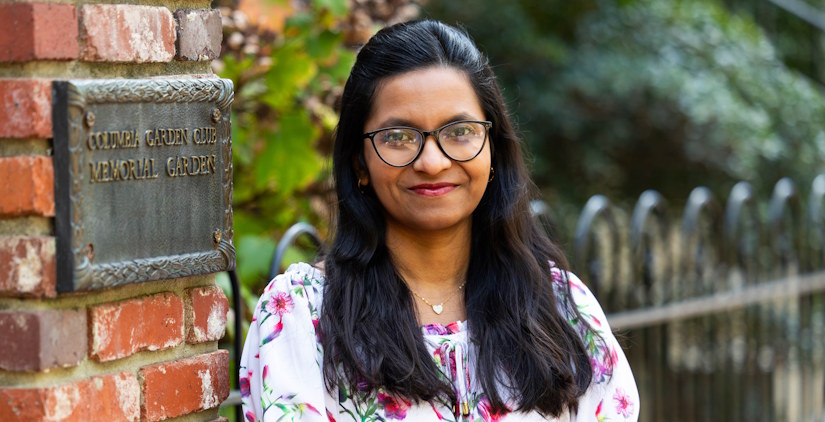
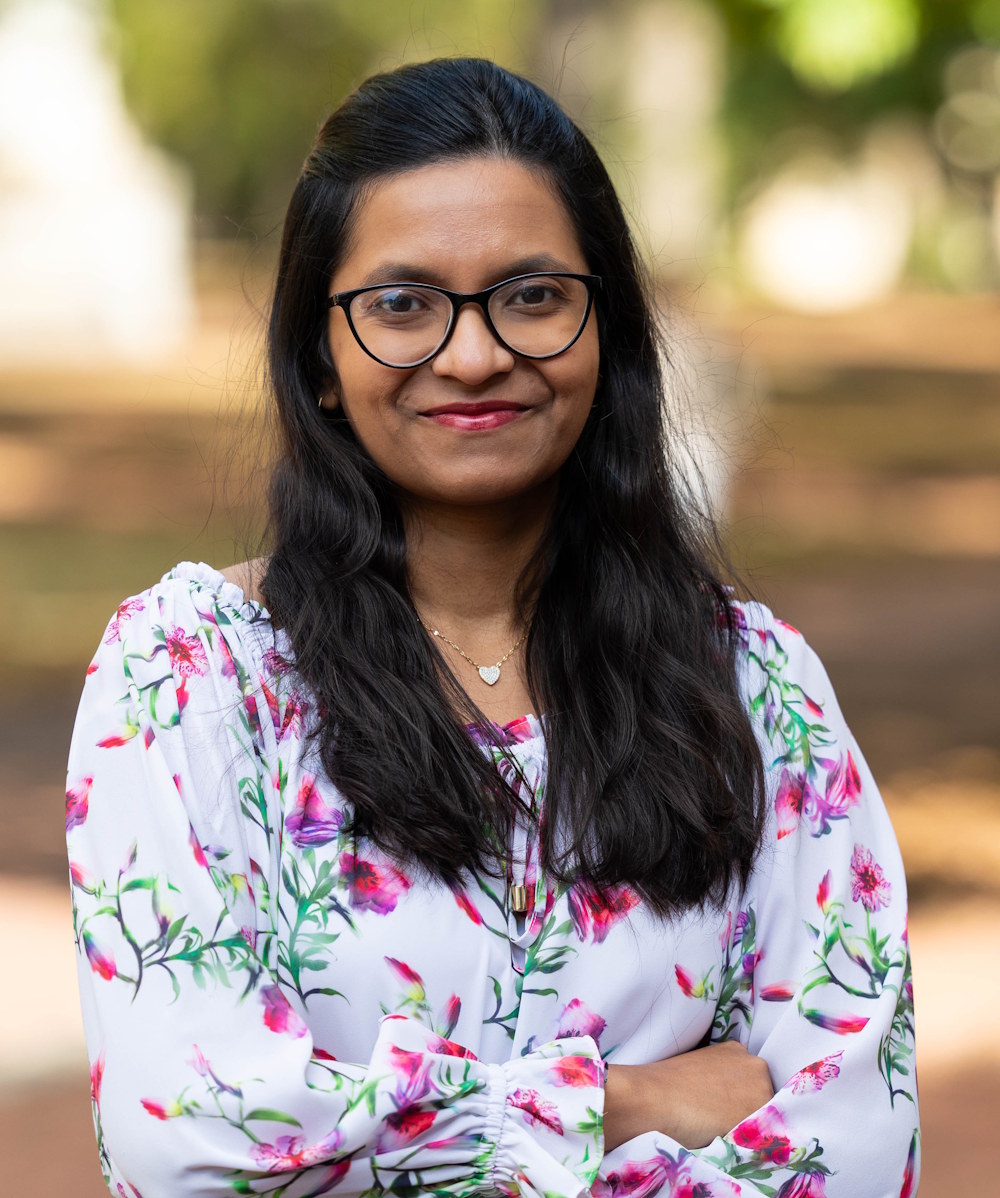
Adiba Promiti graduates in December with a Ph.D. in Biostatistics.
“Dr. Hardin has been central to my development as a methodological researcher,” Promiti
says. “His expertise in generalized linear models aligned with the interests I developed
through my applied work, and his guidance helped me pursue my dissertation research
on boundary inflation, truncation and digit preferences.”
Promiti also developed her methodological knowledge and skills by contributing to
projects across her department and the Department of Health Services Policy and Management as a graduate research assistant as well as through a consultancy for a clinical
study at Prisma Health. Along the way, she found additional mentors in Arnold School
faculty Jihong Liu, Peiyin Hung, Enakshi Saha, and Pengfei Guo.
“These research experiences and mentors helped me connect statistical methods with
substantive public health questions and shaped my interest in maternal and child health,”
Promiti says. “Overall, my doctoral training has prepared me to examine the assumptions
behind an analysis, develop methods when existing approaches do not adequately address
the data, and collaborate with researchers from different disciplines. I hope to use
these skills to contribute evidence that informs better care and improves women’s
and children’s lives.”
Promiti’s career as an independent researcher will begin after her December graduation.
She’s looking forward to helping solve the many challenges affecting women and children
across countries and health systems. Her goal to improve maternal and child health
may have risen to the surface during her doctoral program, but it ties much further
back to two women who influenced her overarching educational journey. Her mother persisted
in her education despite considerable opposition after losing her father during childhood,
while Promiti's paternal grandmother dedicated her life to advancing women’s education
and helping women overcome such barriers.
“Their experiences have shaped how I understand the importance of education and the
opportunities it can create for women,” Promiti says. “My work in maternal and child
health has given me a way to connect that personal inspiration with my professional
goals. As a researcher, I hope to contribute, even in a small way, to improving women’s
lives.”